THE SPARK: WHEN MINIMALIST SCANDINAVIAN DESIGN MET VIETNAMESE CRAFT VILLAGES
Modern geometric homeware is crafted by merging ancient Vietnamese weaving techniques with rigid internal metal frames and precise tension mapping. This innovative fusion allows natural materials like seagrass and water hyacinth to take on the sharp, clean lines demanded by contemporary global markets. For decades, artisans in Ha Nam, Vietnam, wove organic, free-flowing shapes that celebrated the natural asymmetry of wild fibers.
Today, the rise of warm minimalism and biophilic design has forced a quiet revolution in these traditional craft villages. Can a wild, hand-harvested river plant truly conform to the sterile, mathematical precision of a Scandinavian blueprint? Yes, it can.
Global buyers no longer have to choose between the raw warmth of nature and the clean structure of modern architecture. By redesigning the underlying architecture of woven goods, we have bridged the gap between heritage and modern design. This evolution is not just about aesthetics.
It is a calculated response to a shifting B2B market that values both cultural authenticity and standardized structural integrity. Let us look at how this transition occurred. We will explore the journey from a simple river reed to a high-end designer basket.
The Rise of Biophilic Geometry in Modern Interiors
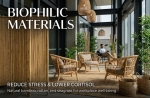
Modern interior designers increasingly demand structured organic materials. They seek products that ground a space while maintaining clean, architectural lines. This trend, often referred to as biophilic geometry, combines the psychological benefits of natural textures with the visual calm of geometric order.
Traditional woven items often lacked the sharp angles required for this aesthetic. By adapting ancient Vietnamese weaving to these modern shapes, we create pieces that fit perfectly into upscale, minimalist environments. These products bridge the gap between cold industrialism and warm rustic charm.
For a global retail buyer, stocking these items means capturing a highly lucrative market segment. Consumers are willing to pay a premium for items that tell a story of sustainability and craftsmanship. This is why geometric natural woven goods are currently dominating high-end retail catalogs.
The Heritage of Ha Nam's Weaving Villages
In the quiet provinces of Ha Nam, Vietnam, weaving is not just a job. It is a multi-generational language spoken through the hands of master artisans. For centuries, these weavers worked with local seagrass and water hyacinth, transforming them into soft, rounded household utilities.
These traditional items tolerated natural variance. A basket could be slightly wider on one side without losing its function or charm. However, the modern B2B export market demands absolute uniformity across thousands of units.
To meet these standards, we had to systematically document and standardize age-old techniques. This process required a deep respect for the artisans' heritage combined with modern quality control. The result is a hybrid manufacturing model that preserves culture while meeting global commercial needs.
The Intersection of Handcraft and Industrial Design
Bridging the gap between a rural artisan's hand and a global retailer's specification sheet requires a new methodology. We had to translate fluid, intuitive hand movements into repeatable, standardized steps. This transition did not destroy the craft.
Instead, it elevated the artisans' skills, challenging them to master a new level of precision. Today, our weavers work alongside industrial designers to create products that are both hand-crafted and mathematically sound. This synergy is the foundation of our modern geometric collections.
By using technical drawings and precise prototypes, we ensure everyone is aligned before mass production begins. Weavers receive hands-on training for each new geometric design. This collaborative environment ensures that the final product matches the designer's vision exactly.
THE TENSION OF THE CURVE: WHY ORGANIC FIBERS RESIST SHARP ANGLES
The primary challenge in adapting organic fibers to sharp geometric designs lies in material shrinkage, structural warping, and maintaining perfect angles. Natural fibers are inherently dynamic, absorbing and releasing moisture based on environmental conditions. When a wet seagrass strand dries, it contracts, pulling the surrounding weave with immense force.
If the weave is wrapped around a sharp 90-degree corner, this contraction can cause the entire structure to twist, warp, or collapse entirely. How do we make a wild, living material behave like molded plastic or stamped metal? The answer requires a deep understanding of organic material physics.
Each fiber species reacts differently to tension and humidity, requiring tailored handling protocols before weaving even begins. Without these strict protocols, a container of geometric baskets shipped from humid Vietnam could arrive in dry European warehouses completely warped and unsellable. This is a risk no global buyer can afford.
The Hygroscopic Nature of Natural Fibers
Natural fibers are highly hygroscopic, meaning they constantly exchange moisture with the surrounding air. As moisture levels fluctuate, the fibers expand and contract. In a round basket, this movement is distributed evenly across the curved surface.
In a geometric box, however, the stress accumulates at the sharp corners, leading to structural deformation. Managing this moisture equilibrium is the first and most critical step in our manufacturing process. We must stabilize the fibers before they are woven onto any frame.
This stabilization involves controlled drying and climate-conditioned storage. By keeping the raw material at a consistent moisture level, we minimize the risk of post-weaving movement. This scientific approach is essential for producing reliable, high-volume geometric homeware.
Understanding Material-Specific Stress Points
Different natural materials present unique challenges when forced into geometric shapes. Water hyacinth is thick and spongy, making sharp corners bulky and difficult to define. Seagrass is thin and highly twisted, which creates high tensile stress that can pull frames out of alignment.
Rattan is strong and semi-rigid, but it requires heat treatment to bend into precise angles without splintering. Understanding these material-specific stress points is crucial for successful product development. Our engineering team analyzes these physical properties for every new design.
By matching the right material to the right geometric structure, we avoid structural failures. For example, we often combine rigid rattan frames with soft seagrass weaving to achieve both strength and texture. This material synergy is key to our product durability.
|
Material
|
Tensile Strength
|
Shrinkage Rate
|
Best Geometric Application
|
Core Challenge
|
|
Seagrass
|
High
|
Medium (5-8%)
|
Rectangular bins, flat panels
|
High corner tension
|
|
Water Hyacinth
|
Medium
|
High (8-12%)
|
Thick-weave storage cubes
|
Bulky corners, mold risk
|
|
Rattan Core
|
Very High
|
Low (1-3%)
|
Structured frames, console drawers
|
Splintering at sharp bends
|
|
Bamboo Split
|
Extreme
|
Low (2-4%)
|
Geometric lanterns, open-weave trays
|
Sharp edges, labor-intensive
|
|
Acacia Wood
|
Extreme
|
Very Low (under 1%)
|
Solid bases, geometric lids
|
Moisture cracking if untreated
|
The Human Factor: Standardizing Hand Tension
No two weavers pull a fiber with the exact same amount of force. This variance in hand tension is the enemy of geometric precision. A weaver who pulls too tightly will cause the basket walls to bow inward.
A weaver with a loose grip will create sagging, asymmetrical sides. Standardizing this human element requires rigorous training and the introduction of physical guides to ensure consistency across the entire production line. We conduct daily quality checks on the weaving floor to monitor tension.
By grouping weavers into specialized teams based on their tension profile, we achieve remarkable consistency. This level of operational detail is what sets our manufacturing process apart. It ensures that your bulk orders look uniform on the retail floor.
THE ENGINEERING BREAKTHROUGH: MOLDS, FRAMES, AND MATHEMATICAL WEAVING
We solved the warping problem by introducing anti-rust powder-coated iron skeletons and standardized wood molds that guide weavers' hands along precise millimeter-level grids. This hybrid approach combines the strength of industrial metalwork with the organic beauty of hand-weaving. Before a single strand of seagrass is woven, our engineering team designs a heavy-duty iron frame.
This frame is welded to exact tolerances of +/- 2mm, providing a rigid foundation that resists the immense shrinking forces of drying fibers. To ensure the weaver maintains perfect straight lines and sharp corners, we insert a custom-designed wooden mold inside the frame. The artisan weaves directly against this solid wooden block, which acts as a physical barrier against over-tightening.
Once the weaving is complete, the mold is removed, leaving behind a perfectly geometric, structurally sound masterpiece that will never warp, even during long ocean transits. This simple yet highly effective system revolutionized our production capabilities.
The Role of Custom Wooden Molds
The wooden mold is the unsung hero of modern geometric weaving. It provides a solid, unyielding surface that guides the weaver's hands. By keeping the mold inside the frame during the entire weaving process, we eliminate human error regarding dimensions.
This ensures that every single basket in an order of ten thousand units has the exact same length, width, and height. Our molds are designed in-house and can be customized for any geometric shape, from simple cubes to complex octagons. This tooling capability allows us to rapidly prototype new designs for our clients.
Furthermore, these molds are crafted from sustainable local wood, aligning with our circular economy principles. They are durable, reusable, and essential for maintaining high-volume consistency. Without them, scaling geometric weaving would be impossible.
Advanced Weaving Techniques for Sharp Edges
To achieve sharp, defined edges, our master artisans developed specialized weaving techniques. The 'Wrapped Weave' involves tightly winding thick fibers around the corner pillars of the iron frame, creating a clean, vertical line that defines the shape. The 'Checkerboard Weave' is used on flat panels to create a grid pattern that visually reinforces the geometric structure.
These advanced techniques require years of practice and a deep understanding of fiber behavior under tension. We have formalized these techniques into a training curriculum for our younger weavers. This ensures that the specialized knowledge is preserved and passed down.
By combining different weaves on a single product, we can create stunning visual and tactile contrasts. For instance, a basket might feature a tight, flat weave on the sides and a chunky, wrapped weave on the corners. This adds depth and modern sophistication to the design.
Scientific Moisture Control and Biomass Drying
Controlling moisture is critical to preventing post-production warping and mold growth. After weaving, the products are placed in our state-of-the-art biomass drying chambers. We monitor the moisture levels using digital hygrometers, bringing the core moisture down to a safe 12% to 14%.
This specific range ensures the fibers are dry enough to prevent mold, yet flexible enough to avoid becoming brittle. This scientific approach to drying is what allows our geometric products to survive global transit and varied climates. It is a non-negotiable step in our quality assurance protocol.
Our biomass chambers run on agricultural waste, making the process highly sustainable. We do not rely on fossil fuels to dry our products. This eco-friendly method reduces our carbon footprint while ensuring the highest product quality.
Rigorous Jig Testing and Quality Control
Quality control at Ngoc Dong Ha Nam is a multi-stage, systematic process. Every finished geometric item must pass through a physical testing jig. This jig is a metal cage built to the exact maximum dimensions allowed by the client's specifications.
If a basket does not slide smoothly into the jig, it is rejected and sent back for adjustment. This rigorous testing guarantees a 100% fit-rate for retail shelves and nesting requirements. We leave absolutely nothing to chance.
Our QC team is independent of the production line, ensuring unbiased evaluations. They check for symmetry, weave tightness, frame alignment, and moisture content. This thorough inspection process is why global brands trust us with their high-volume orders.
THE NEW STANDARD: SCALING SUSTAINABLE GEOMETRY FOR GLOBAL SUPPLY CHAINS
Global retailers now secure reliable, high-volume supplies of eco-friendly geometric decor that pass strict international standards (BSCI, FSC) without losing their handmade soul. This successful adaptation has opened up massive opportunities for B2B buyers looking to meet the growing consumer demand for sustainable home goods. By combining traditional craftsmanship with modern engineering, we provide products that are both beautiful and highly functional.
Furthermore, geometric designs are highly efficient for global logistics. Unlike irregular, organic shapes, geometric baskets and furniture can be nested perfectly inside one another. This nesting capability dramatically increases the product density per shipping container, reducing freight costs by up to 40% and lowering the overall carbon footprint of the supply chain.
In a market where shipping costs and sustainability are paramount, this is a game-changing advantage. It allows our partners to maximize their retail margins while reducing their environmental impact. Let us examine how we optimize these logistics.
Maximizing Shipping Efficiency Through Nesting
Geometric shapes are inherently stackable. We design our geometric collections in graduated size sets, allowing smaller pieces to fit snugly inside larger ones. This nesting technique minimizes dead space inside export cartons and shipping containers.
For B2B buyers, this translates directly to lower landed costs and higher profit margins. It also reduces the amount of packaging material required, aligning with global zero-waste initiatives. We work closely with our clients' logistics teams to optimize these nesting ratios during the design phase.
A well-designed nested set can double the number of units shipped in a single container. This geometric efficiency is a key selling point for high-volume retailers. It turns logistics from a cost center into a competitive advantage.
Meeting International Compliance Standards
Modern retail giants require more than just beautiful products; they demand ethical and sustainable supply chains. Ngoc Dong Ha Nam is fully compliant with major international standards, including BSCI (Business Social Compliance Initiative) and SMETA. Our natural materials are responsibly sourced, and our wood-integrated products are FSC-certified.
This compliance gives our global partners complete peace of mind, knowing their products are made under fair labor conditions with minimal environmental impact. We undergo regular third-party audits to maintain these certifications. This transparency is central to our business philosophy.
We believe that ethical manufacturing is the only way forward. By supporting our local weavers with fair wages and safe working environments, we ensure the long-term viability of this beautiful craft. This social sustainability is woven into every product we export.
|
Sourcing Criteria
|
Our Standard
|
Benefit to B2B Buyers
|
|
Dimensional Tolerance
|
+/- 2mm to 5mm
|
Guaranteed shelf fit, seamless nesting
|
|
Moisture Content
|
12% - 14%
|
Zero mold risk during ocean transit
|
|
Social Compliance
|
BSCI & SMETA Audited
|
Protects brand reputation, ethical sourcing
|
|
Material Certification
|
FSC-Certified wood/bamboo
|
Meets strict environmental regulations
|
|
Logistics Optimization
|
Graduated nesting designs
|
Reduces shipping costs by up to 40%
|
THE FUTURE OF SUSTAINABLE GEOMETRIC DESIGN
As we look to the future, the integration of technology and handcraft will only deepen. We are constantly experimenting with new sustainable materials and advanced frame designs to push the boundaries of what is possible with natural fibers. Our goal remains unchanged: to deliver world-class, sustainable homeware that honors our heritage while meeting the rigorous demands of modern global retail.
Partnering with us means investing in a reliable, innovative, and deeply responsible supply chain. We invite global buyers and interior designers to explore the possibilities of modern geometric weaving with us. Together, we can create spaces that are both beautifully modern and deeply connected to nature.
Let us shape a more sustainable future, one precise angle at a time. Contact our sales team today to discuss your custom geometric design requirements. We are ready to turn your vision into reality.
This article is authored by Thong Nguyen – Co-owner & Sales Director at Ngoc Dong Ha Nam Co., Ltd. With 25+ years of experience managing and operating manufacturing facilities for export housewares and handicrafts, we specialize in providing high-quality bamboo, rattan, water hyacinth and natural acacia wood manufacturing solutions for global retail partners.
FREQUENTLY ASKED QUESTIONS
How do you ensure geometric woven baskets do not warp during shipping?
We prevent warping by using rigid, powder-coated iron frames and maintaining a strict moisture level of 12% to 14% using biomass drying chambers.
Can natural fibers like water hyacinth and seagrass achieve sharp 90-degree angles?
Yes, by weaving the fibers tightly over a custom-designed wooden mold and welding internal metal skeletons, we can achieve highly defined 90-degree angles.
What are the logistics benefits of sourcing geometric woven homeware?
Geometric items can be nested perfectly inside one another, which optimizes container space, reduces packaging waste, and lowers shipping costs by up to 40%.
Are your geometric natural fiber products compliant with global retail standards?
Yes, all our manufacturing processes are fully compliant with BSCI and SMETA social audits, and we use FSC-certified wood and bamboo.