THE SOURCING BOTTLENECK: WHY GLOBAL RETAILERS STRUGGLE WITH TRADITIONAL HANDICRAFTS
Global retail buyers fail to scale handicraft sourcing because traditional artisan networks lack the industrial infrastructure, strict quality control, and international compliance certifications required for high-volume distribution.
As consumer demand shifts toward sustainable, organic home decor, global procurement teams are under immense pressure to source natural fiber products. Items like woven seagrass baskets, rattan serving trays, and water hyacinth storage bins offer the rustic, eco-friendly aesthetic modern shoppers crave. Yet, translating this artisanal charm into a reliable, high-volume retail program remains a notorious supply chain bottleneck.
The Fragmentation of Artisanal Supply Chains
Most handicraft production in Southeast Asia is highly decentralized, relying on independent cottage industries and family-owned workshops. Can a loosely organized group of rural weavers guarantee identical dimensions across a 20,000-unit retail order? Rarely. Without standardized molds, uniform raw material grading, and centralized oversight, manual weaving naturally introduces significant dimensional variances. This lack of consistency leads to high rejection rates at the receiving warehouse, destroying retail margins.
The Technical Nightmare of Moisture and Mold
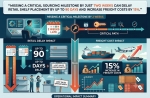
Natural fibers are highly hygroscopic, meaning they constantly absorb and release moisture based on their environment. When harvested, materials like water hyacinth and bamboo contain high levels of water. If these materials are not dried scientifically, they retain internal moisture. During a 40-day ocean transit inside a sealed shipping container, temperatures can fluctuate wildly, causing the trapped moisture to evaporate and condense. This phenomenon, known as 'container rain,' creates a hot, humid breeding ground for mold and mildew. Buyers frequently open containers at destination ports only to find entire shipments ruined by black mold.
The Chemistry of Natural Fibers and Why Traditional Curing Fails
Raw bamboo and rattan contain high levels of starch and sugar, which naturally attract wood-boring insects and mold spores. Traditional workshops often attempt to prevent this by using primitive chemical treatments, such as sulfur smoking or toxic pesticides. While these methods are cheap, they leave harmful residues that violate strict EU and US chemical safety regulations, such as REACH and FDA food-contact standards. Modern retailers cannot risk selling products that fail chemical safety tests. Sourcing from a supplier utilizing non-toxic, eco-friendly preservation methods remains a top priority.
The Logistics of Container Condensation
Shipping natural handicrafts across oceans involves navigating extreme temperature shifts that trigger dew point changes inside cargo containers. A container loaded in the tropical humidity of Vietnam will experience dramatic temperature drops as it travels to North America or Europe. This temperature drop causes the air inside the container to release water, which drips directly onto the cargo. Without professional-grade desiccants, moisture-barrier packaging, and scientifically dried products, the risk of water damage is extremely high. Most small-scale exporters simply do not understand the physics of maritime logistics, leaving buyers to bear the financial loss.
The Compliance and Ethical Sourcing Gap
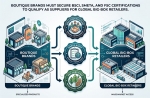
Modern retail giants like Costco, Walmart, and Target operate under strict corporate social responsibility frameworks. They require transparent, fully auditable supply chains that protect workers' rights and ensure environmental sustainability. Unfortunately, most small-scale craft workshops operate entirely in the informal economy. They cannot provide verified proof of fair wages, safe working conditions, or legal material sourcing. Sourcing from uncertified workshops exposes global brands to severe reputational risks and legal liabilities. Without globally recognized audits like BSCI, SMETA, or FSC, a supplier is immediately disqualified from entering the enterprise-level market.
|
Sourcing Criteria
|
Traditional Craft Workshops
|
Industrialized Manufacturing (Ngoc Dong Ha Nam)
|
|
Production Capacity
|
Low and highly seasonal; highly dependent on local agricultural cycles.
|
High and consistent; 300 to 400 40-foot containers exported annually.
|
|
Moisture Control
|
Rely on outdoor sun-drying, leading to high mold risk during wet seasons.
|
Scientific kiln-drying and insulated, climate-controlled storage.
|
|
Quality Standardization
|
High variance in size, color, and weave tightness due to lack of QC.
|
Strict multi-stage QC with standardized metal molds and technical specs.
|
|
Social Compliance
|
No formal audits; high risk of labor violations and opaque supply chains.
|
Fully audited and certified by BSCI, SMETA, SCAN, and ISO 9001/14001.
|
|
Material Traceability
|
Opaque sourcing; unable to verify legal harvesting or sustainable forestry.
|
FSC-certified woodware (Simply Acacia) and fully traceable natural fibers.
|
For global buyers, the choice is clear. Relying on fragmented networks is a recipe for supply chain disruption. Sourcing successfully at scale requires a partner that has industrialized the artisanal process.
THE HYBRID MODEL: HOW NGOC DONG HA NAM SOLVES THE SCALE-VERSUS-ARTISTRY PARADOX
Ngoc Dong Ha Nam bridges the gap between artisanal heritage and industrial-scale production by combining a centralized 12,000 square meter state-of-the-art facility with a decentralized network of over 2,000 skilled village artisans.
How did a company originating from a traditional craft cooperative in 1988 transform into a global manufacturing powerhouse? The answer lies in our unique hybrid production engine. We realized early on that to satisfy global retail giants, we had to industrialize the supply chain without losing the authentic soul of handmade Vietnamese crafts. This realization led to the development of a highly synchronized manufacturing ecosystem.
The Centralized-Decentralized Hybrid Engine
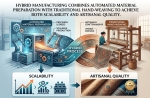
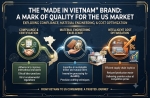
Our operations are split strategically between our centralized factory and our vast network of rural artisans. We perform all critical, high-risk steps inside our highly controlled 12,000 square meter facility in Ha Nam province. This includes raw material grading, chemical-free treatment, standardized frame fabrication, final assembly, and packaging. Meanwhile, we delegate the labor-intensive weaving process to over 2,000 trained artisans across local craft villages. By providing these artisans with standardized metal molds and pre-sorted, treated materials, we ensure absolute dimensional consistency. This unique model preserves traditional livelihoods while meeting the strict tolerances required by global retail distribution centers.
Scientific Moisture Control and Advanced Infrastructure
How do we guarantee that our products arrive mold-free after a grueling ocean voyage? We replaced primitive sun-drying methods with scientific, climate-controlled infrastructure. Our facility features three high-capacity, automated drying rooms. These rooms use precise temperature and humidity sensors to extract moisture uniformly from natural fibers and wood. We maintain strict target moisture levels: under 12% for our Simply Acacia woodware and under 18% for woven rattan, bamboo, and water hyacinth. Furthermore, we operate three insulated, climate-controlled warehouses capable of storing over 40 containers of finished goods. This advanced storage system preserves product quality for up to six months, protecting against seasonal humidity spikes.
Standardizing the Unstandardizable: Our Multi-Stage Quality Control Protocol
To ensure perfect consistency across thousands of handmade items, we implement a rigorous four-stage quality control protocol. First, we inspect and grade all raw materials before they enter production. Second, our QC inspectors visit the craft villages daily to check the weave quality and dimensions of semi-finished products on their molds. Third, after the products are returned to our central factory and dried, we conduct a comprehensive moisture test using calibrated pin meters. Finally, before packaging, we perform a 100% visual inspection to check for loose fibers, sharp edges, and structural integrity. This meticulous process ensures that every item shipped meets the exact standards of global retail buyers.
Material Science and the Simply Acacia Brand
Our commitment to material excellence is best demonstrated by our Simply Acacia brand. Acacia wood is highly prized for its rich grain, natural durability, and rapid growth cycle. However, without expert kiln-drying and curing, acacia is prone to warping and cracking. We utilize advanced vacuum-kiln technology to stabilize the wood fibers before manufacturing. Every kitchenware and tabletop item we produce meets strict food-contact safety standards, utilizing non-toxic, lead-free finishes. This rigorous attention to material science ensures that our wooden housewares perform flawlessly in diverse global climates.
Uncompromising Social and Environmental Compliance
Can a manufacturer survive in today's B2B landscape without robust certifications? Absolutely not. We have built our entire business model around international compliance standards. Our facility undergoes regular, independent third-party audits to maintain prestigious certifications. We are proud to hold BSCI and SMETA certifications, verifying our ethical labor practices, fair wages, and safe working conditions. Additionally, our ISO 14001 certification guarantees that our manufacturing processes minimize environmental impact. For supply chain security, our SCAN audit compliance ensures seamless customs clearance into North American ports. By aligning our operations with these rigorous frameworks, we eliminate compliance risks for our global partners.
THE PROVEN IMPACT: SCALING SUSTAINABLE VIETNAMESE HANDICRAFTS TO GLOBAL RETAIL GIANTS
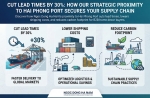
Ngoc Dong Ha Nam consistently delivers over 300 to 400 40-foot containers of premium, compliant natural home decor annually to global giants like Walmart, Costco, and Target.
The true measure of a manufacturer's capability lies in its long-term performance and market impact. For over three decades, we have proven that sustainable, handmade products can be scaled to meet the demands of the world's most demanding retailers. Our track record speaks volumes about our operational resilience and commitment to quality. How does this impact translate to tangible benefits for our retail partners?
Unmatched Capacity and Operational Scale
With an annual export volume of 300 to 400 containers, we possess the manufacturing muscle to support massive seasonal rollouts. Our facility is engineered for high-frequency, large-volume production. Whether a buyer requires a nationwide program of 50,000 woven laundry baskets or a curated collection of acacia serving boards, we scale production smoothly. Our three dedicated workshops and optimized assembly lines ensure that high-volume orders do not compromise craftsmanship. We manage lead times with extreme precision, ensuring on-time delivery even during peak shipping seasons.
Frictionless B2B Onboarding and Supply Chain Integration
We make the onboarding process seamless for global procurement teams by integrating directly with their supply chain systems. Our sales and logistics teams are fully experienced in handling EDI (Electronic Data Interchange) transmissions, custom barcode labeling, and complex palletization specifications. We understand the strict routing guides of major retailers and ensure that all documentation, packing lists, and commercial invoices are flawless. This technical capability prevents costly administrative delays and ensures that our containers move quickly through the logistics network. Our proactive communication style keeps buyers informed at every stage of production, from raw material sourcing to final port departure.
A Case Study in Scale: Meeting a 100,000-Unit Holiday Order
To demonstrate our capacity, let us examine a real-world scenario where a major US retailer ordered 100,000 water hyacinth storage baskets for a holiday promotion. A project of this scale would paralyze traditional craft workshops. However, by utilizing our hybrid model, we mobilized 1,500 artisans across five villages to complete the weaving in parallel. The raw materials were treated and pre-sorted at our central factory, and the finished weaves were dried in our climate-controlled rooms within 48 hours of receipt. The entire order was packed, inspected, and shipped in 12 consecutive containers over a six-week period. Every single container arrived on schedule, and the product rejection rate was less than 0.1%, showcasing our unmatched operational reliability.
Strategic Partnerships with Global Retail Leaders
We are not just a supplier; we are a strategic partner to the world's elite retail brands. Our client portfolio includes household names such as Walmart, Costco, Target, Lowes, At Home, Williams-Sonoma (WSI), Lidl, Aldi, and Kmart Australia. These retail giants have some of the most stringent quality assurance and supply chain security protocols in existence. Passing their rigorous factory audits year after year is a testament to our operational excellence. Our partners trust us because we consistently deliver products that meet their exact specifications, with virtually zero defect rates.
Empowering Communities and Driving Sustainability
Sourcing from Ngoc Dong Ha Nam means investing in a sustainable future for rural Vietnamese communities. By employing over 2,000 local artisans, we provide stable, fair-wage incomes that elevate entire villages. This economic empowerment particularly benefits rural women, allowing them to earn a livelihood without leaving their ancestral homes. Furthermore, our focus on fast-growing natural fibers like water hyacinth and seagrass promotes ecological balance. We actively prevent water hyacinth from clogging local waterways while utilizing it as a valuable raw material. Our FSC-certified acacia wood ensures that every tree harvested is replaced, preserving Vietnam's vital forest ecosystems.
To summarize our operational capabilities, let us look at the key metrics that define our manufacturing standard:
|
Operational Metric
|
Capability Details
|
|
Factory Footprint
|
12,000 square meters of highly organized, modern manufacturing space.
|
|
Artisan Network
|
Over 2,000 trained weavers across traditional craft villages in Ha Nam.
|
|
Export Volume
|
300 to 400 40-foot containers shipped globally per year.
|
|
Key Certifications
|
SCAN, BSCI, SMETA, ISO 9001, ISO 14001, and FSC.
|
|
Material Expertise
|
Acacia wood, bamboo, rattan, water hyacinth, paper rope, and seagrass.
|
By choosing Ngoc Dong Ha Nam, global buyers gain a reliable, compliant, and highly scalable manufacturing partner. We invite you to collaborate with us to bring the finest sustainable Vietnamese craftsmanship to your customers.
This article is authored by Thong Nguyen – Co-owner & Sales Director at Ngoc Dong Ha Nam Co., Ltd. With 25+ years of experience managing and operating manufacturing facilities for export housewares and handicrafts, we specialize in providing high-quality bamboo, rattan, water hyacinth and natural acacia wood manufacturing solutions for global retail partners.
FREQUENTLY ASKED QUESTIONS
What certifications does Ngoc Dong Ha Nam hold for global retail compliance?
Ngoc Dong Ha Nam holds key international certifications including SCAN, BSCI, SMETA, ISO 9001, ISO 14001, and FSC, ensuring full social and environmental compliance for global retail partners.
How does Ngoc Dong Ha Nam prevent mold and moisture damage during shipping?
We prevent mold by utilizing three high-capacity drying rooms to reduce moisture levels below strict thresholds (under 12% for acacia wood, under 18% for natural fibers) and storing finished goods in three insulated warehouses.
What is the annual production and export capacity of Ngoc Dong Ha Nam?
Our annual production capacity allows us to export 300 to 400 40-foot containers of high-quality handicrafts, supported by a 12,000 square meter factory and a network of over 2,000 trained artisans.
Which natural materials does Ngoc Dong Ha Nam specialize in?
We specialize in manufacturing premium home decor and housewares from sustainable Acacia wood, bamboo, rattan, water hyacinth, paper rope, and seagrass.