UNDERSTANDING THE FOUNDATION OF VIETNAMESE BUSINESS CULTURE
Building a resilient manufacturing supply chain in Vietnam requires global buyers to prioritize relational trust over purely transactional agreements. While Western business models emphasize legal contracts and strict performance metrics, Vietnamese commerce is built on interpersonal connection and mutual respect. This guide provides a strategic roadmap for global home decor brands, retail buyers, and interior designers to successfully navigate these cultural dynamics. By aligning your procurement strategies with local business etiquette, you can unlock preferential pricing, production priority, and superior product quality from your manufacturing partners.
WHY CULTURAL ALIGNMENT MATTERS IN HANDICRAFT SOURCING
Vietnam has emerged as a premier global hub for sustainable home decor, specializing in natural materials like bamboo, rattan, seagrass, water hyacinth, and acacia wood. However, sourcing these handcrafted products involves decentralized artisan networks and specialized manufacturing facilities. Without a deep understanding of local cultural nuances, international buyers often face miscommunications, unexpected production delays, or quality alignment issues. Respecting the local heritage and business customs transforms a standard buyer-seller dynamic into a highly collaborative, exclusive manufacturing alliance.
PREREQUISITES: THE MINDSET SHIFT REQUIRED BEFORE SOURCING FROM VIETNAM
Global buyers must transition from a short-term transactional purchasing mindset to a collaborative, long-term partnership approach before engaging with Vietnamese manufacturers. Entering negotiations with a demanding, adversarial attitude will immediately alienate local factory owners and lead to suboptimal production priority. Instead, approach your supplier as a strategic co-creator of your product line. This mindset shift is particularly critical when sourcing handmade home decor, where artisan craftsmanship cannot be rushed by automated machinery.
EMBRACING PATIENCE AND SHARED RISK
Patience is the single most valuable asset when establishing a supply chain in Vietnam. Handcrafted manufacturing involves complex, weather-dependent drying and weaving processes that require flexible timelines. When you show willingness to share risks—such as adjusting delivery schedules during extreme monsoon seasons—your supplier will reciprocate with absolute dedication during your peak sales seasons. This mutual flexibility forms the bedrock of supply chain resilience.
Step 1: Decoding 'Relationship-First' Business (Quan Hệ)
The Vietnamese concept of 'Quan Hệ' defines business success through mutual commitment, personal trust, and shared long-term benefits rather than legal contracts alone. In Vietnam, business is deeply personal, and factory owners prefer to work with people they know, like, and trust. If a supplier feels a strong personal connection with you, they will go to extraordinary lengths to resolve production issues, expedite urgent shipments, and protect your intellectual property. Contracts are viewed as frameworks for cooperation, whereas the relationship itself is the true guarantee of performance.
Transactional vs. Relational Sourcing Models
To help your procurement team transition to a relational model, review the core differences outlined in the table below:
|
Sourcing Aspect
|
Transactional Sourcing (Western)
|
Relational Sourcing (Vietnamese Model)
|
|
Primary Focus
|
Lowest unit price and rigid contract terms.
|
Mutual growth, trust, and shared success.
|
|
Communication Style
|
Strictly professional, formal, and ad-hoc.
|
Frequent, personal, open, and proactive.
|
|
Problem Solving
|
Penalties, blame, and legal threats.
|
Collaborative troubleshooting and joint solutions.
|
|
Supplier Loyalty
|
Low; buyers switch for minor price drops.
|
High; suppliers prioritize loyal partners during crises.
|
Step 2: Mastering Indirect Communication and Saving 'Face' (Giữ Thể Diện)
Vietnamese suppliers practice indirect communication to preserve 'Face' (Giữ Thể Diện), meaning a polite 'Yes' often signifies understanding rather than absolute agreement. In Vietnamese culture, maintaining social harmony and avoiding public embarrassment are paramount. Direct confrontation, harsh criticism, or public anger will cause your supplier to lose 'Face,' which can permanently damage or terminate the business relationship. To succeed, you must learn to read between the lines and create safe spaces for honest feedback.
How to Ask Open-Ended Questions
Avoid binary yes-or-no questions when verifying production timelines or quality standards. Instead of asking, 'Can you deliver this container by October 15th?'—which will almost always receive a polite but potentially unrealistic 'Yes'—reframe your inquiry. Ask open-ended questions such as, 'What is the current production status of our order, and what challenges might we face with the upcoming weather?' This allows the supplier to communicate potential delays honestly without losing dignity.
Step 3: Navigating Negotiations with Empathy and Flexibility
Successful price and MOQ negotiations with Vietnamese handicraft manufacturers succeed when conducted as a collaborative problem-solving exercise rather than a zero-sum game. If you squeeze a supplier's profit margins too tightly, they may be forced to compromise on material quality, artisan wages, or factory working conditions. This ultimately jeopardizes your brand's reputation and product durability. Instead, focus on creating win-win scenarios that respect the factory's operational costs and social compliance commitments.
Negotiating with Transparency
Share your target retail price and estimated annual order volumes openly with your manufacturing partner. When suppliers understand your long-term volume projections, they are far more willing to invest in custom tooling, raw material stockpiling, and dedicated production lines. Discuss cost drivers transparently, such as the rising cost of certified FSC acacia wood or BSCI-compliant labor, to find creative ways to optimize designs without compromising ethics.
Step 4: Establishing On-Site Trust through Factory Visits
Direct factory visits build irreplaceable trust by showing suppliers your genuine commitment to their craft, community, and manufacturing workforce. While digital communication is highly efficient, nothing replaces the impact of walking the factory floor, shaking hands with the management team, and observing the artisans at work. These visits signal to the manufacturer that you view them as an integral part of your brand's global family.
Etiquette for Visiting Vietnamese Factories
When planning a factory visit, observe local hospitality customs to make a lasting positive impression. Bring small, high-quality corporate gifts from your home country to present to the factory owners. Accept invitations to shared lunches or dinners, as these informal settings are where the strongest business bonds are forged. Show sincere interest in the local community and the traditional weaving techniques of the artisans, as pride in craftsmanship is deeply rooted in Vietnamese culture.
Step 5: Aligning Quality Standards with Local Craftsmanship Realities
Aligning quality expectations with Vietnamese suppliers requires translating rigid Western design specifications into clear, visual, and physical tolerance limits that respect hand-made variation. Natural materials like rattan, bamboo, seagrass, and water hyacinth possess inherent organic variations in color, texture, and dimensions. Trying to apply machine-made tolerances to hand-woven home decor will lead to high rejection rates and supplier frustration. Establish clear, realistic quality control (QC) standards early in the product development phase.
Implementing Golden Samples and Tolerances
Create a mutually signed 'Golden Sample' and a physical 'Limit Board' displaying acceptable and unacceptable variations in natural materials. This visual reference eliminates language barriers and ensures that factory QC teams and third-party inspectors are completely aligned. The table below outlines typical natural material behaviors and standard acceptable QC tolerances:
|
Material Type
|
Natural Material Behavior
|
Acceptable QC Tolerance Limit
|
|
Bamboo & Rattan
|
Slight color variation, natural nodes, minor diameter tapering.
|
Color matching within 10% range; maximum 2mm diameter deviation.
|
|
Water Hyacinth & Seagrass
|
Moisture absorption, organic scent, slight weaving tension variance.
|
Moisture content strictly below 12-15%; maximum 1.5cm size deviation.
|
|
Acacia Wood
|
Distinct grain patterns, natural knots, minor wood movement.
|
Kiln-dried to 8-12% moisture; no structural cracks allowed.
|
CONCLUSION: CULTIVATING A SHARED VISION FOR SUSTAINABLE GROWTH
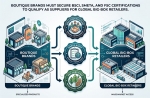
Long-term supply chain resilience in Vietnam is achieved when buyers invest in their suppliers' social compliance, environmental stewardship, and technological upgrading. By supporting your partner's journey toward international certifications like BSCI, FSC, and SMETA, you secure a highly ethical, transparent, and marketable supply chain. These shared values protect your brand from global compliance risks while ensuring the artisans who craft your products receive fair wages and safe working conditions. Treat your Vietnamese supplier as an extension of your own business, and they will reward you with decades of loyalty, innovation, and exceptional craftsmanship.
This article is authored by Thong Nguyen – Co-owner & Sales Director at Ngoc Dong Ha Nam Co., Ltd. With 25+ years of experience managing and operating manufacturing facilities for export housewares and handicrafts, we specialize in providing high-quality bamboo, rattan, water hyacinth and natural acacia wood manufacturing solutions for global retail partners.
FREQUENTLY ASKED QUESTIONS
How do I handle production delays with a Vietnamese supplier without damaging the relationship?
Address production delays by scheduling an open, collaborative video call to discuss the root cause rather than sending accusatory emails. Express your shared commitment to resolving the issue, ask how you can help optimize the process, and work together on a realistic adjusted timeline while preserving the supplier's 'Face'.
What is the best way to introduce strict quality control measures to a traditional factory?
Introduce strict quality control measures by co-developing physical 'Golden Samples' and visual 'Limit Boards' at the factory before mass production begins. This collaborative, visual approach respects the artisans' craft while establishing clear, measurable boundaries for acceptable natural variations.
Are contracts legally enforceable and useful when sourcing from Vietnam?
Yes, contracts are legally enforceable and necessary for regulatory compliance, but they should be viewed as a secondary safety net rather than the primary driver of supplier performance. A strong, trust-based relationship (Quan He) is far more effective at ensuring quality and on-time delivery than legal threats.
How can I verify if a Vietnamese supplier meets global social compliance standards?
Verify social compliance by requesting valid, third-party audit reports such as BSCI, SMETA, or FSC certifications. Leading manufacturers will proactively share these audit results and demonstrate continuous improvement in factory working conditions and environmental practices.